

The agentic economy cannot scale until there is a shared way to measure, prove and price the risk that an autonomous system creates. This risk is only knowable if you can first establish who authorised the agent’s behaviour and under what authority.
Such a human authorisation layer was the original concept behind Humanos. The company created a system to turn human decisions into a reusable decision layer, providing cryptographically verifiable evidence of human consent before an agent executed a decision, transforming authorisation records from something stored across various PDFs and databases into a single record of truth that is able to scale at the same pace as the automation. The product has seen real traction, and has been deployed across 350+ hospitals, insurers and fintechs.
However, this human authorisation layer has evolved to become the foundation, rather than the entirety, of the product. On top of it, the Humanos team has created a “Risk Network for AI”, a common layer through which the risk created by AI agents can be continuously measured, understood and controlled. Humanos captures runtime and transaction evidence as the agent acts, and standardises this data into a single “Risk Intelligence” score.
Over time, this intelligence contributes to the agent’s “Risk Passport”, a persistent record of an agent’s identity, behaviour and economic outcomes. The passport is portable and travels with the agent across its entire network, ensuring that a trusted agent does not need to rebuild trust each time it has to interact with a new insurer, lender or other financial institution. This grants each provider the ability to interpret the same data and act according to their own risk appetite.
Without such an interoperable network, every time an agent engaged with a new party, that party’s only way of knowing whether the system is safe would be to conduct independent research. Clearly, this system would breed inefficiencies and could not scale at the pace required in the agentic economy. To make an analogy, it is a broadly similar issue that consumer lending faced before standardised credit scores existed, when lenders had to form an independent judgement of a borrower’s risk rather than relying on a shared score.
Humanos is solving this problem within the agentic economy by collecting data that allows agentic activity to be insured and financed efficiently. The data provides insurers and lenders verifiable evidence that an agent is genuinely low risk, rather than asking them to underwrite or finance a risk they cannot see without independently establishing it themselves.
We believe that critical industries will be unable to deploy autonomous systems without infrastructure to continuously understand, control and prove the risk that the systems create. As agents obtain greater autonomy and become involved in increasingly important economic activities, financial institutions will need a common risk layer to price and finance the behaviour. Humanos can provide this layer, which we believe will be one of the core enabling layers of the agentic economy and facilitate the safe deployment of the productive potential of AI within our society, and explains why we are so excited to invest in them.
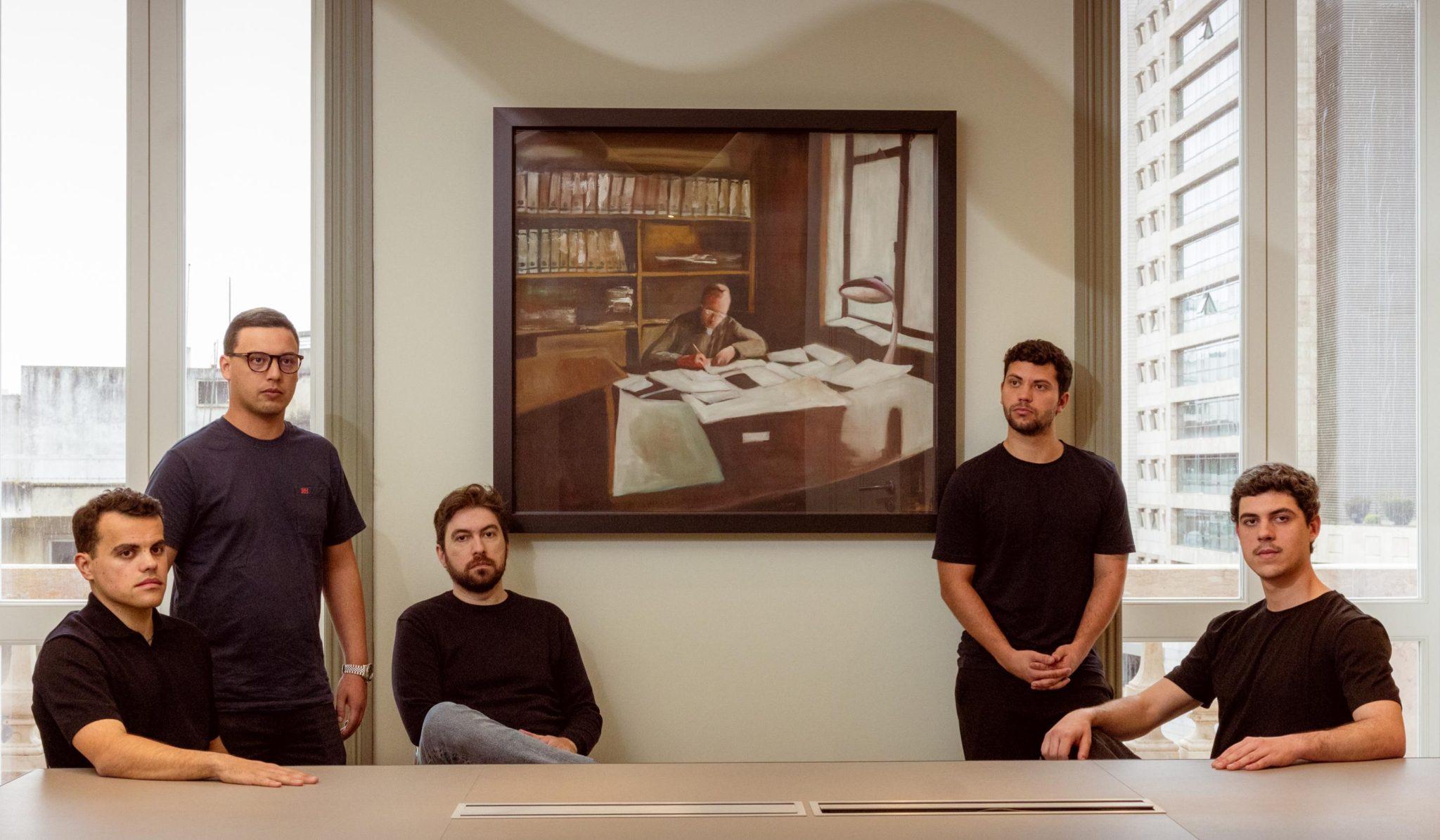
To go after such a huge, yet nascent, opportunity requires the right mix of complementary skillsets, tenacious attitudes and relevant experience. This summarises the Humanos team. Led by CEO Pedro Andrade, the founding team, Artur, Rui, Rodrigo and Gonçalo, have the operational experience and grit to build a truly category-defining company from the ground up.
Every interaction that we have had with the team reinforces our excitement to work with them to achieve this goal, and explains why we are so excited to announce that we have led Humanos’ $3.2m seed round, alongside participation from Critical Ventures, Transatlantic Highway Ventures, SpringBank,, and Start Ventures.
